People or surgery courses
Used only when individual people or separate operations can be identified reliably.
Trust & methodology
ReplacedHip is for people considering hip replacement, preparing for surgery or finding their way through recovery. It brings patient experiences into a structured, transparent format without presenting them as medical advice.
Patient experience data
Forum material is not a representative survey. Contributors are self-selected, information is often incomplete, and different questions require different analysis units.
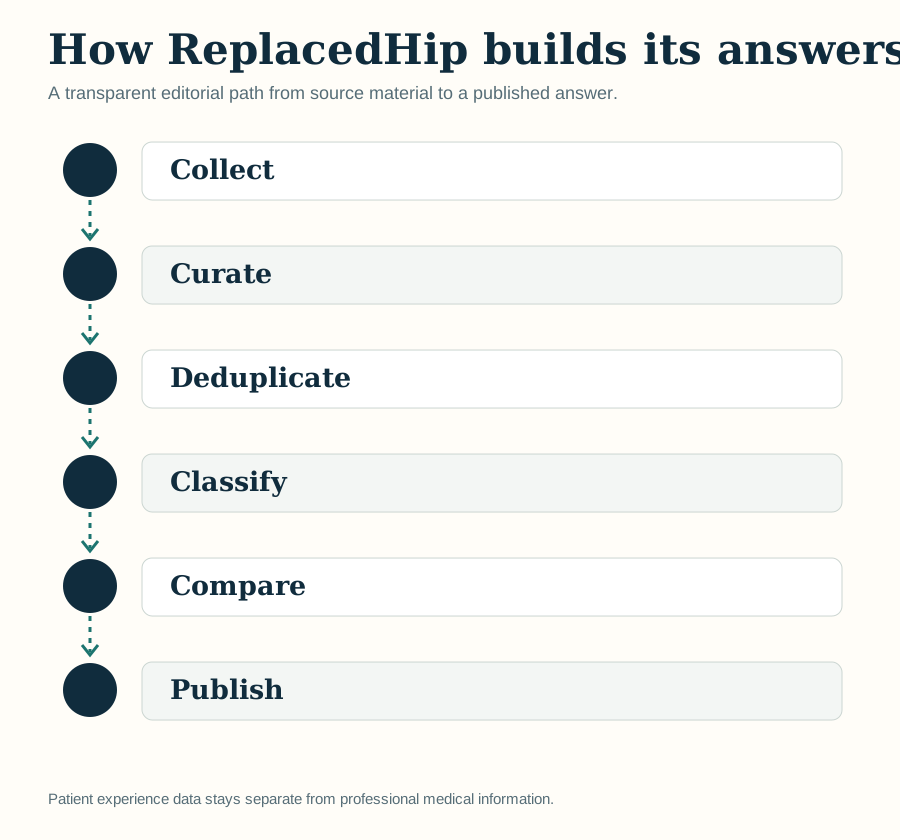
Relevant patient and forum material is preserved privately with source-level traceability.
Potentially relevant material is checked manually before it becomes a published patient finding.
Repeated posts and identifiable repeated experiences are handled so one account is not counted several times.
Questions, first-person experiences, advice, third-party stories and medical claims are kept distinct.
Shared patterns and meaningful differences are assessed with the most defensible analysis unit for each question.
The short answer, evidence counts, limitations and separate professional context are published together.
This plain HTML uses no script, widget or tracking. It links the figure back to its ReplacedHip source page.
These figures show aggregated ReplacedHip analyses, not representative survey estimates or medical advice. Attribution and a link to the relevant ReplacedHip page should accompany reuse. Rights in underlying forum material are not transferred. Read the usage statement and methodology.
What the numbers mean
Used only when individual people or separate operations can be identified reliably.
Used when the material supports a distinct, relevant experience but not a verified person count.
Shows how widely the evidence is distributed and prevents one large discussion from looking like many independent sources.
A larger evidence base and a wide observed span can strengthen confidence that variation is real. They do not create one precise “normal” recovery timeline.
Medical information
Medical claims are not drawn from forum discussions. ReplacedHip prioritizes clinical guidelines, public health services and established professional organisations such as NICE, NHS, AAOS and AAHKS.
Editorial review
ReplacedHip checks wording against the documented evidence behind each answer. Counts are shown only with a defined analysis unit, uncertainty is retained, and raw usernames or technical source identifiers are not published.
Medical information pages show their last reviewed and last updated dates. Patient-experience answers are revised when a new manual curation materially changes the evidence—not simply to make a page appear newer.
View substantive evidence updatesRSS feed
Public accountability
ReplacedHip publishes the rules used to distinguish editorial checks from a real, version-bound external medical review. No medical-review credit is shown before that review has occurred.
See the method in practice
Each published analysis defines its own evidence unit, keeps patient experience separate from medical information and preserves uncertainty.
Method and source policy Editorial reviewCorrectionsIndependence