Last reviewed August 21, 2026Publisher ReplacedHipPatient experience evidence
Evidence resource
Hip replacement recovery evidence
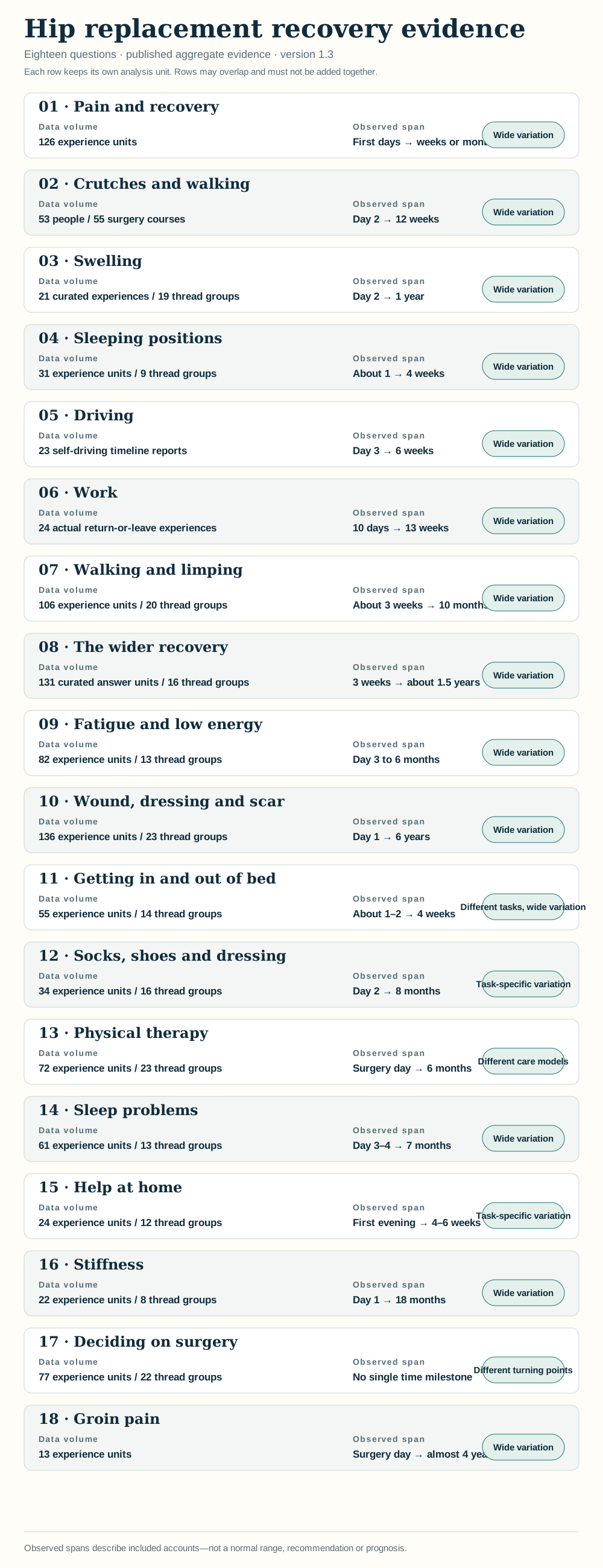
A question-by-question map of the patient-experience evidence ReplacedHip has already published—showing the analysis unit, observed span and variation for each topic.
Published analyses
Eight questions, eight defined evidence views
This map compares published values without converting people, surgery courses, reports, experience units, answer units or thread groups into one another.
Do not total these rows. The same source or contributor may support more than one question, and each row keeps the analysis unit appropriate to that question.
Interpretation guide
How to read the evidence
These are general reading principles, not statistical confidence categories. ReplacedHip has not applied new thresholds or reclassified the eight analyses.
More + narrow
More evidence + narrow spread
More support for a relatively consistent pattern.
More + wide
More evidence + wide spread
More support that substantial variation is genuinely present.
Less + narrow
Less evidence + narrow spread
Interesting signal, but limited evidence.
Less + wide
Less evidence + wide spread
Considerable uncertainty; more evidence is needed.
Evidence-unit definitions
The denominator follows the question
People
Used only when an individual contributor can be identified reliably.
Surgery courses
Separate operations can be counted when one person describes more than one hip replacement course.
Experience or answer units
Distinct relevant contributions retained when a verified person count is not the defensible unit.
Timeline reports
Directly validated reports of the specific milestone named in the analysis.
Thread groups
Deduplicated discussion groups showing how widely the material is distributed.
Forum material is self-reported and not a representative survey. ReplacedHip separates first-person experiences from advice, claims and third-party stories before publishing patterns and variation.
This resource brings existing public analyses into one comparison view. It does not introduce a combined sample size, new patient findings or a universal recovery timeline. Print styles retain the evidence map, method note, review date and source URL.